New treatment offers hope to advanced pancreatic cancer patients

Christina Hoy, DNP, clinical program director of the Pancreatic Diseases Specialty Clinic at Nebraska Medicine | Fred & Pamela Buffett Cancer Center, explains how daraxonrasib, approved by the FDA in August, offers a targeted treatment for patients with advanced pancreatic cancer.
What is daraxonrasib?
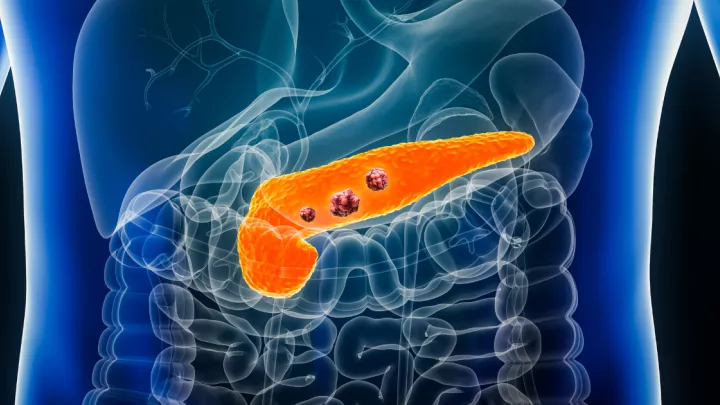
Daraxonrasib is a pill taken by mouth once a day. It blocks the RAS pathway, a signaling system that helps control how cells grow and divide. Abnormal RAS activity is found in more than 90% of pancreatic ductal adenocarcinomas. You can think of RAS like an ON switch for a cell. When it gets stuck in the ON position, it keeps signaling cancer cells to grow and survive. Pancreatic cancer can be aggressive and hard to treat, so a therapy that may improve outcomes is exciting.
What did the clinical trial show?
The phase 3 RASolute 302 trial compared daraxonrasib with standard chemotherapy. It included people with pancreatic cancer that had progressed after earlier treatment. Patients who took daraxonrasib lived a median of 13.2 months. Those who received chemotherapy lived a median of 6.7 months. The median time before the cancer grew was 7.2 months versus 3.6 months. These results cannot predict what will happen for each patient. Still, they show that targeting RAS can make a real difference.
How is daraxonrasib different from chemotherapy?
Traditional chemotherapy affects many rapidly dividing cells throughout the body. Daraxonrasib interferes specifically with the RAS signaling pathway that helps drive cancer growth. Researchers are also studying it earlier in pancreatic cancer treatment and in combination with other therapies.
Who may be eligible for this treatment?
The decision is different for each patient. We consider past treatments, overall health, ability to perform daily activities, lab results, and features of the cancer.
What about follow-up care and side effects?
Although daraxonrasib is a pill, patients still need regular lab tests and clinic visits. Common side effects can include rash, diarrhea, nausea, and a sore or inflamed mouth. If we find problems early, we can often treat them before they get worse. We want patients to stay on treatment when it helps and have the best quality of life possible.
Why does care close to home matter?
Offering new treatment options at the Fred & Pamela Buffett Cancer Center allows patients to stay closer to their families and support systems. They receive care from a team that specializes in pancreatic cancer. Through research and teamwork, we can bring the latest advances to patients in Nebraska and across the region.
What should patients ask their care team?
Don’t assume there are no options left if one treatment stops working. Pancreatic cancer treatment is changing. Ask if your tumor has had the appropriate testing. Also ask if a targeted treatment or clinical trial may be an option. We may not have every answer yet, but we are making progress. This newly approved treatment gives us another tool to fight a difficult disease. And, most importantly, it gives patients another reason to have hope.